

Has anyone experimented with resin printed wheels?

After spending too much time hunched over holding a dremel in one hand, a straight razor in the other, and after covering my floor entirely with plastic dust, I decided I was going to find a way to make my own coned wheels. At the same time, I'd eliminate the trial and error of looking for "fast" wheels out the box, as they would all have much more consistent construction, with perfectly rounded and centered bores.
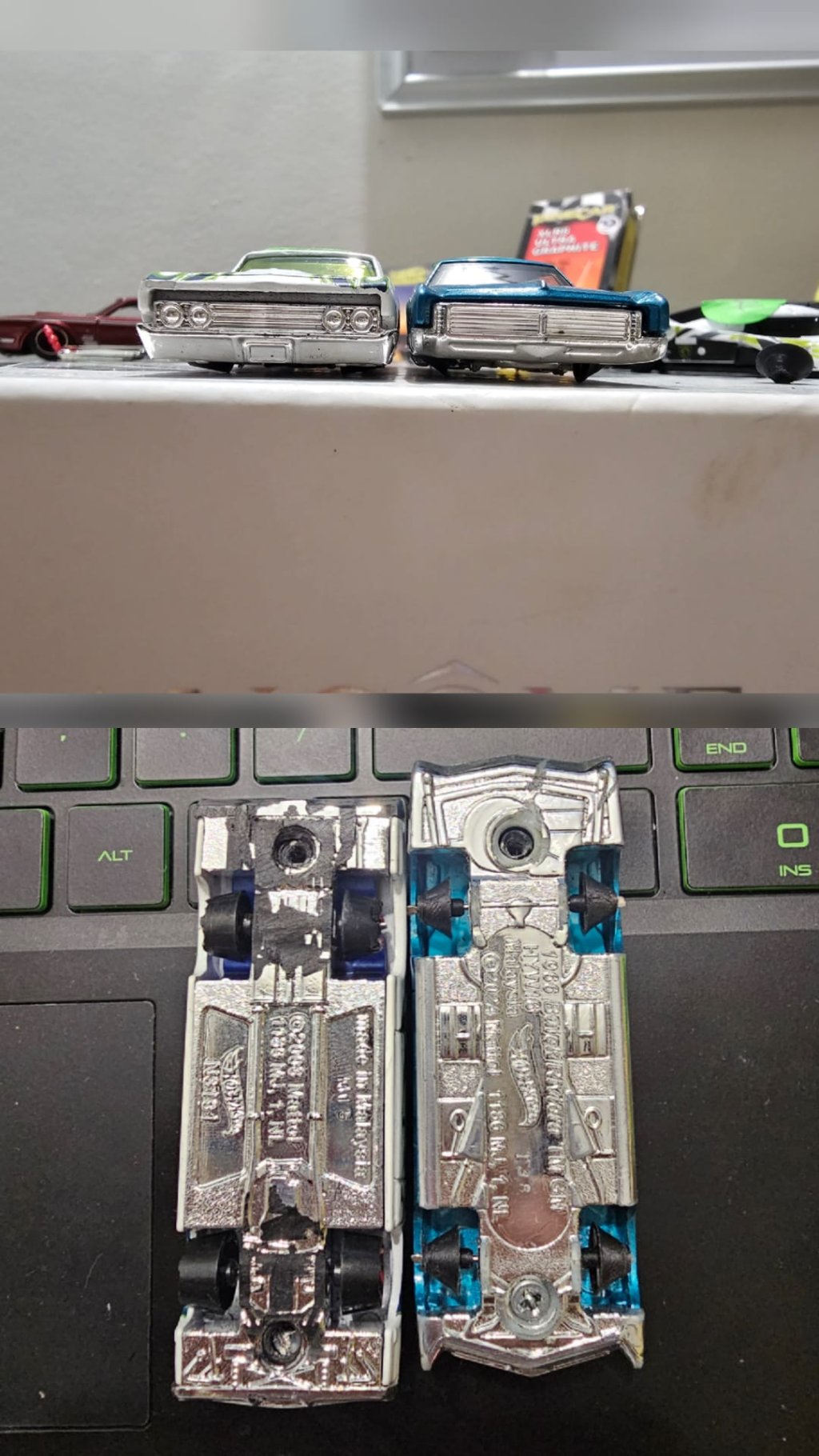
It took me a lot of tinkering between modifying the STL, working with the slicer, and getting the measurements just right to produce what I was looking for, and in the end I got an acceptable result (showcased in the images below, the wheels on the blue Riviera, compared side by side to a set of hand coned, albeit lesser-angled-class wheels on the Torino).
However, despite all the wheels being identical, because of the way an FDM printer works, the layer lines and the way the final layer (the one that makes contact with the track) is printed make for a noisy, bumpy, and high friction wheel. Even while using a 0.2mm nozzle and 0.06mm layer heights to print them.
Seeing as FDM printing is not useful for wheel printing, it made me wonder if a resin 3D printer would work for the task. Resin printers supposedly produce next to no layer lines, and from the resin prints I've seen, the detail and smoothness of them would surely print a perfect wheel.
I want to know if anyone on here has ever tried it. I feel like eliminating the troubles of having to endlessly compare factory wheels to finally find a good set has tempted at least someone once. I'd love to hear whether it works or not.
TL;DR: Has anyone ever used a resin 3D printer to print out wheels to use on their Hot Wheels race cars. If so, did it work well? I tried using a traditional 3D printer and no matter how optimized the print is, the nature of FDM printing prevents them from being useful realistically.
Discussion

DUDE .... those poor wheels on the Riviera .......
Look, if you're going to be using a dremel to spin the wheels, do this:
-Get a ROUND file, preferably one of the jeweler's type files.
-Put a rotary buffing pad on your dremel, like the kind you use to polish the axles.
-Hold the file parallel against the body of the dremel, so the tip of the file is just about level with the buffing pad.
-Hold the car upside down in your other hand.
Touch the file and dremel to each wheel, letting the dremel spin the wheel, while the file drags along the tread of the tire (file should be perpendicular to the wheel, not parallel.)
-Repeat for other three wheels.
Depending on how long you do this method for, you can do shallow coning or deep coning, using the file to shave down the wheel as it's turning. You can also use a rougher-grade file to take off more material if you want. I use this method to get rid of the mold lines from the factory, and it smooths out the wheels pretty well. I can do the entire car in under a minute.
The reason for using a round or rounded file is because a flat file will catch and sometimes tear up the wheel.
- LOL! Don't worry, those are 3D printed! You actually can't get to that angle on a stock wheel without "spokes" forming from the material wearing through. I appreciate the advice! I used to do a similar thing with the Dremel polishing pad, except I would take the wheels out the car and clamp the axles to the table, made it a lot easier. These days I have a custom printed "socket" for my dremel that fits into the space between the wheel's tread and its hub and grabs the four (sometimes 5) support spokes behind the wheel face. Makes for a better rolling wheel as it reduces wobble and makes for a straight rolling surface. I will say though, a boxcutter razor will take considerably longer (it takes me anywhere from 5 to 15 minutes per wheel, depending on what class the car is going to), but the finished product is glass-smooth compared to when you use a file. — Rajatabla_RacingPR
- Maybe flip the cones around to other direction, so that the outer rim is on the outside instead of the inside. As it is, the body is still rubbing against the track, negating any effect the wheels may have. — SpyDude
- Plus, you have room to make the cones larger, as well. — SpyDude
- On the upside with those wheels, if someone had a Bladerunner track, they almost look like hover cars. Cover in the wheel wells and it'll look like the cars floating :) — Chaos_Canyon
- Even better--make them look like Rival Gears cars. — SpyDude
- I actually thought I was gonna beat the locals when I started racing by doing that, but as it turns out, they've been doing this for years now for a reason. Coning the wheels inwards is noticeably faster than coning them outwards. I've asked around and never gotten a solid answer as to why. Some claim aerodynamics, some say it's more stable. FWIW, I believe that because a wheel with positive camber will naturally want to roll inward towards the chassis, it helps the car stay straight and not pull toward the walls, and if it hits the wall, the reduced lateral resistance from a narrow track kills your speed less. At least, that's my theory. — Rajatabla_RacingPR
- I assume the inner cone is faster purely because it would leave less surface area to contact a sidewall, compared to outside coning. Also, wheels off the 8 crate are already coned as a stock wheel if you're looking for any. — Chaos_Canyon
I have messed with printed wheels but only FDM, which isn't as accurate. However, I tried something different for my Bentley continental entry into the GTR Thunder Country comp, which didn't allow coning.
I modelled a custom 3D base to fit within Mark's specs and made it so when the base got screwed together, it added camber to the wheels - the same effect as coning, where only a small surface of the wheel actually touches the track (and yes I did check with Mark that this was allowed). It seemed to work perfectly - see below pics of the added camber and what touches the surface.
It was achieved with a two piece base, where the upper piece extends below the top of the lower surface and there is room for it to press down, essentially putting a bend in the axle while keeping it perfectly aligned with the chassis. My previous attempts at adding camber where disasters as the axles kept twisting and so the wheels wouldn't stay parallel. Whilst I'm barely in the top 20 for the time trials, i think that's more due to me using graphite instead of the silicone/oil, but still very happy how it's preforming, and I think it's one of the faster bentleys that has been entered.